Precision Tree Services Fall River
Menu
10x Most Common Tree Types in Fall River
The urban forest of Fall River, Massachusetts is a magnificent display of its natural beauty. A wide array of tree species can be observed, ranging from tall evergreens to colorful deciduous trees that create an exquisite tapestry with their distinct shapes and hues. This blog post delves into the 10 most frequently seen types of trees in the streets, parks and communities throughout Fall River.
Eastern white pine, Black Cherry, Red Maple, Common Sassafras, American Beech, Eastern Red Cedar, Rose of Sharon, Norway Maple, Common Lilac, Pitch Pine.
White Pine
The Eastern White Pine is one of the most common varieties of trees located throughout Fall River. The Eastern White Pine is a magnificent evergreen with a stately appearance, tall and broad. This tree has soft, bluish-green needles, scaly bark, and can reach heights of 80 feet or more. The Eastern White Pine is valued for its ornamental qualities as well as its ability to provide shelter and shade for the wildlife that call Fall River home, therefore, it is considered one of the favorite trees among residents.
Black Cherry
One of the easiest ways to identify the Black Cherry tree is through its distinctive black bark, along with its hanging clusters of tiny white flowers in the spring. In the fall, the leaves turn bright red/orange, adding a beautiful splash of color to the urban landscape of Fall River.
Red Maple
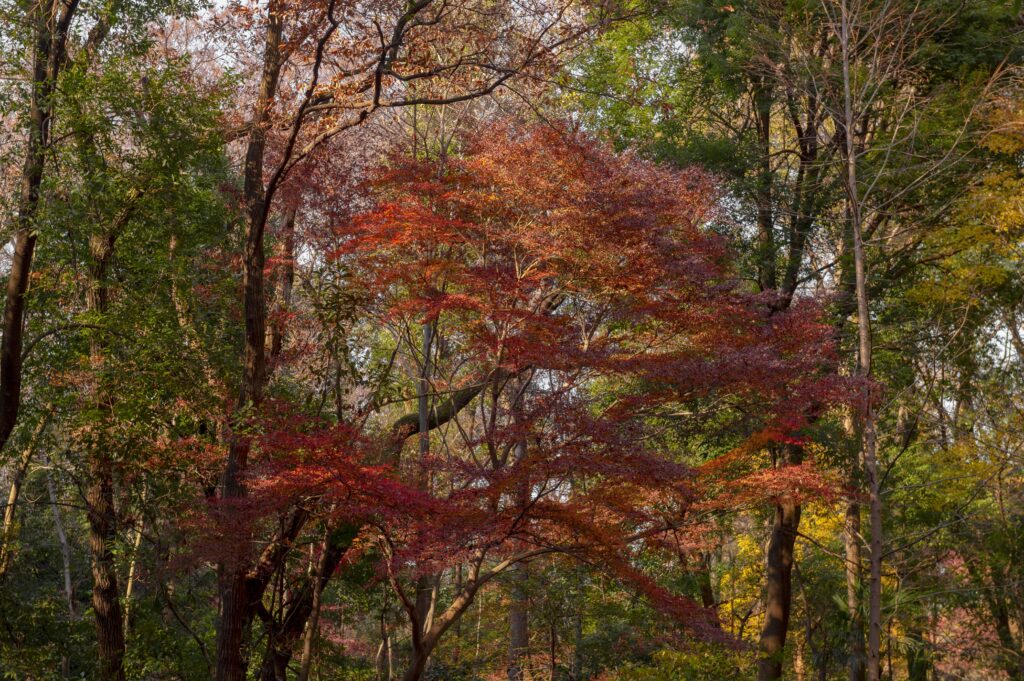
As one of the most prominent deciduous trees in Fall River’s urban forest, the Red Maple is renowned for its brilliant red fall colors, casting a warm glow across the city. This popular tree is also widely used in landscaping because of its attractive shape, low-maintenance requirements, and overall appeal.
Sassafras
Sassafras is a highly unusual tree, attracting attention with its “mitten-shaped” leaves and aromatic bark. Sassafras is a deciduous native tree to the eastern U.S., being highly prized for both its decorative qualities and its medicinal uses (Native Americans have historically used Sassafras roots to treat a variety of ailments).
Beech
Fall River’s urban forest includes the lovely American Beech, characterized by its smooth charcoal-colored bark and extensive branches. The American Beech has a dense crown that serves as a shaded retreat and nesting site for wildlife. When the seasons transition to autumn, the leaves of the picture-perfect American Beech take on an attractive combination of gold/bronze.
Eastern Red Cedar
The Eastern Red Cedar is valued for its fragrant foliage and adaptability to a variety of soils, allowing it to grow as an evergreen. The adaptable Eastern Red Cedar is often seen throughout Fall River, providing a constant element of elegant greenness to the urban surroundings. A benefit of the Eastern Red Cedar is that it produces sap, which is used to produce birch beer, a memory maker for many people.
Rose of Sharon
Throughout the summer and fall months, the Rose of Sharon adds a beautiful touch to Fall River’s communities. This flowering shrub/small tree features large, show-stopping hibiscus-style blooms in shades of pink, purple, and white. While the Rose of Sharon attracts pollinators with its large, showy petals, it also adds an exotic flair to the cityscape as an ornamental plant.
Norway Maple
While the Norway Maple is not native to Fall River’s urban environments, it is a very common sight. This deciduous tree provides a heavy canopy and is able to tolerate the harsher conditions of city life. As the seasons transition into the fall, the leaves of the Norway Maple transform into a rich golden-yellow.
Common Lilac
Fall River’s residential neighborhoods include the lovable Common Lilac, a shrub/small tree celebrated for its fragrant purple-hued blooms each spring. These sturdy perennials bring effortless charm to the neighborhoods as well as their sweet fragrance and beauty throughout the year.
Pitch Pine
With the ability to survive Fall River’s coastal climate, the evergreen Pitch Pine is a native tree species to the eastern portion of the United States. The Pitch Pine is defined by its scaly bark and twisted branches, giving it a rugged look. Additionally, the Pitch Pine is a great addition to Fall River’s urban forests as they create habitats for wildlife and enhances the aesthetic appeal of the landscapes throughout the year.
Fall River’s urban forest is a diverse mix of different types of trees, including majestic evergreen trees and vibrant deciduous trees. The diversity of this group of trees greatly benefits the community’s environment and adds enjoyment to the lives of Fall River’s residents.
No matter if you are a person who appreciates nature or simply a resident seeking escape into a peaceful natural setting, Fall River delights with its lush canopy of trees that adorn park and neighborhood settings alike. The beauty of Fall River’s urban forest will forever be embedded in your thoughts long after you leave.
If you’re looking for a fun way to explore Fall River’s urban forest, consider downloading an app that allows you to learn about the different species of trees in Fall River. This will allow you to identify some of the trees you see while walking or driving throughout the city
LATEST POSTS