Precision Tree Services Fall River

Menu
The First Steps in Storm Damage Cleanup Every Homeowner Should Know
Storm Damage Cleanup Fall River
When severe weather strikes Fall River, Massachusetts, homeowners face the overwhelming task of storm damage cleanup. Whether dealing with fallen trees from nor’easters, hurricane damage along the waterfront, or ice storm destruction throughout the city’s neighborhoods, knowing the proper steps to take immediately after a storm can protect your family, preserve your property, and streamline the recovery process. Understanding what to do in those crucial first hours and days makes all the difference in returning your home to normal.
Ensure That Safety Is Paramount
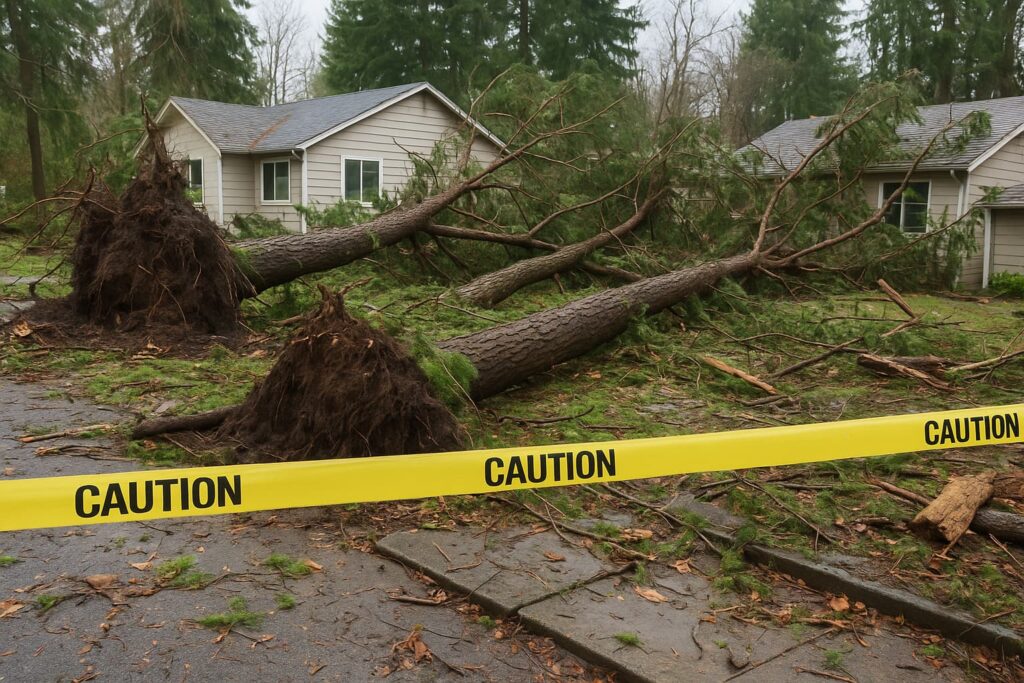
Safety comes above all else when addressing storm damage cleanup in Fall River. Prioritize your safety before beginning to evaluate your property for damage. Check for potential hazards outside your home that may have been created by the storm. The primary hazard to consider is downed power lines, particularly in the area surrounding Government Center and other parts of the Highlands where tall mature trees are near utility lines.
Do not assume that a downed power line is inactive. Report all downed power lines (i.e., lines on the ground, lines that are hanging precariously low, or lines that are entangled in fallen trees) to National Grid immediately. Additionally, keep family members and pets away from any areas where there are active electrical hazards until National Grid has declared them safe. Be aware that water and electricity create a deadly combination; therefore, avoid any puddles or areas of standing water that are near electrical hazards.
Evaluate the structural integrity of your home before re-entering it after evacuating. Assess your home for obvious damage such as broken windows, damaged roofing, or walls that look compromised. If you smell gas inside your home, evacuate the premises immediately and contact the gas company. There is no sense in cleaning up storm damage if there are safety concerns.
Document All Damage for Insurance Claims
Photograph and/or videotape all of the damage to your property before you start cleaning up the damage. Documentation of damage will be essential for making your insurance claim and potentially for obtaining financial assistance from FEMA if the storm creates a Federal Disaster Declaration for Fall River.
Capture wide shots of the entire extent of the damage and then photograph or videotape the details of each problem. Photograph or videotape downed trees, damaged roofing, broken windows, flooding, etc. Document the date and time the photos were taken, if possible, and save the images in the cloud immediately.
Develop a written list of all of the damaged items along with estimates of how old the items are, the cost of purchasing the item, and the estimated cost to replace the item. The written list of damaged items will support your insurance claim and help you avoid overlooking any items during the claims process. Keep all receipts for emergency repairs and temporary fixes you make to protect your property from further damage.
Notify Your Insurance Company Immediately
As soon as you safely can, notify your insurance company about the storm damage. Ideally, you want to notify your insurance company as soon as possible, within 24 hours of the occurrence. Insurance companies rank claims based upon when they were received, and notifying your insurance company as soon as possible may help move your claims process along faster during periods when your insurance company is receiving numerous claims as a result of major storms that occur in Fall River and its surrounding areas.
When you notify your insurance company, be prepared to provide the insurance company with a great deal of detail regarding the damage. Provide the insurance company with information about the time frame in which the damage occurred, the cause of the damage, and your preliminary assessment of the areas that were damaged. Your insurance adjuster will need to come to your property to inspect the damage. Therefore, do not initiate any substantial clean-up activities until you are directed to do so by your insurance company.
It is also a good idea to review your policy to determine what damages your policy covers before initiating any storm damage clean-up activities. Homeowner’s policies generally cover wind and hail damage but exclude flood damage, which requires separate flood insurance. Understanding what damages your policy covers will help you to make informed decisions regarding which repairs to initiate first and which expenses you will need to pay out-of-pocket.
Protect Your Property from Further Damages
Once you have ensured your safety and documented the damage, take reasonable steps to prevent further damage to your property. For example, you may need to cover broken windows with plywood, put a tarp on damaged roofing, or relocate valuable items to a safe place that is protected from leaks. Generally, insurance policies require homeowners to mitigate further damage whenever possible.
If a tree fell onto a structure but does not present a direct safety threat, do not attempt to remove the tree yourself. The weight distribution and stress factors associated with partially fallen trees can be extremely hazardous to manage without the proper equipment and expertise. Hire a professional tree service to remove the tree.
If there is flooding, initiate water removal as quickly as possible to prevent the onset of mold. However, do not use electric pumps or appliances in flooded areas until electrical systems have been inspected and deemed safe to use. As Fall River is located on the coast, homes in the area are particularly vulnerable to storm surges and flooding during major weather events.
Damage to Trees and Landscaping
Trees are perhaps the biggest and most dangerous component of storm damage clean-up. Trees can damage structures, block roadways, and create ongoing safety hazards if not properly addressed. In the established neighborhoods of Fall River, such as Flint Village and the areas around Battleship Cove, mature trees often suffer considerable damage during extreme weather events.
Determine whether trees have sustained obvious structural damage, such as a split trunk, a significant portion of the canopy has been lost, or the roots are exposed. Trees that have lost 50 percent or more of their canopy may not survive, and they can become future safety threats. However, do not assume that damaged trees cannot be saved; certified arborists can often repair trees through proper pruning and maintenance.
In addition to looking for obvious structural damage, also examine trees for less apparent damage, such as bark splits, hanging branches, or trees that are now leaning at new angles. Although these problems may not present immediate dangers, they can develop into serious issues over time. A professional evaluation can help determine which trees can be saved and which trees must be removed for safety reasons.
Begin Safe Clean-Up Activities
Initiate storm damage clean-up with the safest activities first. Clear debris from sidewalks and driveways to allow for safe entry to your property. Remove smaller branches and lighter material that does not require specialized equipment or techniques. Systematically clean the outer perimeter of your property before proceeding to damage to structures.
Always wear the proper protective gear when performing storm damage clean-up activities, including heavy-duty boots, work gloves, eye protection, and a hard hat when available. Debris from a storm can contain sharp objects, nails, broken glass, and splintered wood that can lead to serious injury. Wearing long sleeves and pants will provide additional protection against cuts and abrasions.
Unless you are dealing with very light debris, perform storm damage clean-up activities with another person. Performing activities that involve heavy debris or utilize tools, such as chainsaws, alone is unsafe. Another person will provide safety assistance and help in the event of an emergency. It is also important to take regular breaks to avoid fatigue, which can increase the risk of accidents while performing physically demanding clean-up activities.
Know When to Call Professionals
Although homeowners can safely complete many of the activities associated with storm damage clean-up, there are times when it is necessary to call a professional. Examples of when to call a professional include when dealing with large fallen trees that are in contact with power lines or resting on structures. Only certified arborists equipped with the proper equipment and training should handle these activities.
Structural damage to roofs, foundations, or load-bearing walls should only be evaluated by a professional contractor before attempting repairs. What may seem like minimal damage may indicate a more serious issue that will get worse if not properly addressed. Professional contractors can identify potential problems and help prevent costly errors.
Additionally, electrical damage, including exposed wiring, damaged electrical panels, or flickering lights after a storm, requires immediate attention from licensed electricians. Do not attempt electrical repairs yourself, as improper repairs can lead to continued fire hazards or electrocution risks even after the storm has passed.
Debris Removal
Storm damage clean-up creates massive quantities of debris that must be properly disposed of. After major storms, Fall River usually establishes special collection procedures, including designated pick-up locations and extended collection schedules for storm debris. Contact the Fall River Public Works Department to obtain information on the current status of debris removal services.
Separate debris into various categories when possible. Yard waste, including branches and leaves, may have different collection requirements than construction debris resulting from damaged structures. Hazardous materials, such as chemicals, electronics, and large appliances, have unique disposal procedures and should not be mixed with other storm debris.
Hiring professional debris removal services may be beneficial for large quantities of debris. Companies specializing in debris removal have the equipment and personnel to rapidly complete large-scale debris removal, often in days what may take homeowners weeks. Professional debris removal companies are also knowledgeable about proper disposal practices and can dispose of hazardous materials safely.
Dry Out Water-Damaged Areas
Water damage from roof leaks, broken windows, and flooding must be addressed as soon as possible to prevent mold growth and structural damage. Dry out water-damaged areas as soon as possible, ideally within 24-48 hours. Remove standing water, wet flooring, and soaked materials that cannot be easily dried.
Increase air circulation in water-damaged areas by utilizing fans, dehumidifiers, and opening windows when the weather allows. Continuously monitor the level of humidity and continue drying until the moisture level returns to normal. Professional water damage restoration companies possess specialized equipment that can greatly accelerate this process.
Document the extent of water damage for insurance purposes, including the amount of water in an area, the materials that were damaged, and the cleaning processes implemented. Maintain receipts for any equipment rented or professional services utilized in the mitigation of water damage, as these costs are generally reimbursed by your insurance company.
Storm Resilience
Use the storm damage clean-up process as an opportunity to make improvements to your property that will enhance its ability to withstand future storms. Determine the weaknesses identified by the recent storm and plan to address them. Potential enhancements may include tree trimming, better drainage, stronger protection for windows, and updated emergency supplies.
Identify the performance of the trees on your property during the storm. Trees that performed well during the storm may be good candidates for future landscaping, whereas trees that suffered a great deal of damage may be best replaced with alternative tree species that are more resistant to storm damage and better suited to the coastal environment of Fall River.
Review and update your emergency preparedness supplies and procedures based on lessons learned during the previous storm. Review your evacuation plan, emergency communication methods, and emergency supplies to ensure that they adequately meet the needs of your household during extended power outages or relocation.
Using Local Fall River Resources
Utilize local resources available to Fall River residents during storm damage clean-up activities. The City of Fall River often collaborates with utility companies, emergency services, and volunteers to aid in response to major storms. Continue to stay informed via official city announcements and local media outlets for information on available services.
Precision Tree Services Fall River understands the unique challenges that coastal storms bring to local properties. We have assisted numerous homeowners in navigating storm damage clean-up safely and efficiently in areas including the waterfront near Heritage State Park and in interior neighborhoods around Oak Grove Cemetery. Due to our knowledge of Fall River’s native tree species, soil conditions, and typical storm impacts, Precision Tree Services Fall River is able to provide targeted solutions for storm recovery.
You may be eager to return to normal quickly following a storm; however, it is imperative to balance the urgency of storm damage clean-up with safety and a thorough approach. Properly addressing storm damage can protect your family, preserve your insurance benefits, and ensure that repairs resolve the underlying problems rather than merely treating surface-level damage. If you are uncertain about any aspect of the storm damage clean-up process, seek the advice of experts who can advise you on how to proceed in a safe and effective manner.
LATEST POSTS